

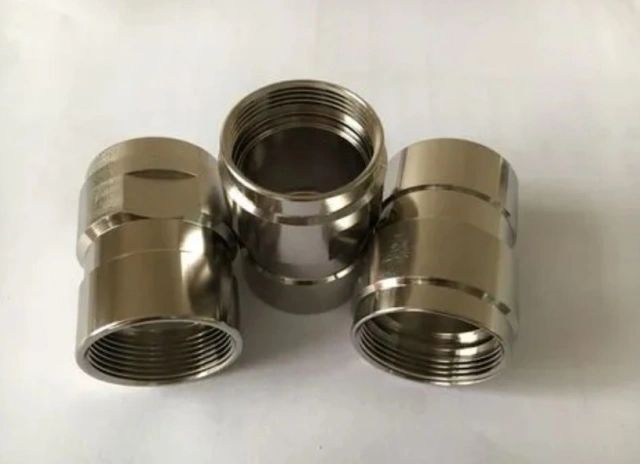
EN 6786 is an electroless nickel high phosphorus plating process — a nickel–phosphorus alloy that builds on the part without any applied current. The deposit comes out semi-bright to bright and is specified where a part needs a hard, corrosion-resistant, non-magnetic surface rather than a decorative shine.
Because no current drives deposition, an electroless nickel plating process coats the surface it is given rather than the surface the current happens to reach. Edges, bores, threads and recesses build at the same rate as flat faces, and most parts come off the line without re-machining to hold tolerance.
It is aimed at industrial metal plating shops that cannot accept uneven coverage or a magnetic finish — aerospace hardware, automotive components, electronics housings and industrial valves among them — and it is the usual choice when parts are heat treated after plating to reach the higher hardness range. Fengfan is a leading provider of advanced metal plating services, specializing in high-phosphorus electroless nickel plating. We focus on quality and innovation and offer a comprehensive range that includes aluminum anodizing and zinc nickel plating, tailored to different client needs. Our team uses modern electroplating equipment to deliver efficient, precise results, and our expertise also covers surfactants and paint chemicals for more complete production support. We aim to build long-term relationships through reliable service and value, and our experts are ready to help you reach your goals.
| Property | Value |
|---|---|
| Coating type | Electroless nickel–phosphorus alloy |
| Magnetism | Non-magnetic |
| Phosphorus content | 10–14 wt% |
| Coating density | 7.1–7.9 g/cm³ |
| Melting point | 860–950 °C |
| Electrical resistivity | 40–100 µΩ·cm |
| Hardness as plated | 500–600 HV |
| Hardness after heat treatment (400 °C for 1 hour) | 900–1000 HV |
| Specifications the deposit is built to meet | MIL-SPEC 26074D and AMS 2404B |
The corrosion case for this electroless nickel high phosphorus process rests on two measurements. In neutral salt spray to ASTM B117 — 35 °C, 5% NaCl — the deposit holds above 1000 hours. In the nitric acid test, a 68% concentrated nitric acid dip at room temperature produces no colour change after a minute or more, which is the quick check most shops use to confirm that a deposit is sound rather than porous.
On the floor that translates into parts that can face road salt, wash-down chemicals, hydraulic fluid and coastal air without leaning on a topcoat for protection. Where the part is critical, test the component rather than a flat panel: geometry, deposit thickness and any post-plate heat treatment all move the number, and we will confirm the test basis with you before you write it into a drawing.
The practical difference from a decorative nickel is that this electroless nickel coating protects by being continuous, not by being thick. An even film over a complex shape does more for a bore or a thread root than a heavy film sitting on the faces that happened to see the current.
A long bath life is the strongest environmental argument for this high phosphorus electroless nickel plating route. Because the bath runs beyond 8 cycles before it is spent, there are fewer make-ups to handle and fewer dumps to treat per part plated — less chemical handling, less effluent and less downtime on the line.
The process also avoids the current-density penalty of electrolytic nickel. There is no overplating on edges and no starving in recesses, so the nickel phosphorus plating is not thickened in one place simply to satisfy the thinnest point on the part. The same protection is reached with a more even film, and there is less polishing afterwards to bring the surface back.
For compliance paperwork, ask your sales contact which documents apply to your shipment. Declarations are issued against the lot you actually receive rather than against a generic product sheet, and that is the version your customer's quality team will want to file.

| Minimum order quantity | Varies by chemical; confirmed with our sales team per order |
| Packaging | 10 kg/box; 25 kg or 50 kg/bag; 20 kg, 25 kg, 30 kg or 200 kg/drum; 1,000 kg/IBC drum |
| Lead time | 2 weeks |
| Payment | 100% T/T in advance |
| Shipping | Per the terms agreed in the current contract |
| Documentation | Inspection certificate issued after delivery, stating the batch number and warranty period |
| Bulk and repeat supply | Quoted per order against quantity, packing and destination |
| Technical follow-up | Bath make-up, top-up and troubleshooting support through your sales contact |
In electronics manufacturing, precision and reliability matter. Our electroless nickel plating supports conductive surfaces on circuit boards and connectors, and high-phosphorus nickel helps deliver solderability and corrosion resistance for consistent device performance. Proper surface cleaning before plating is also important for adhesion and finish, and we combine metal plating with paint chemical expertise to help components meet industry standards.
Fengfan is committed to eco-friendly practices, including aluminum anodizing services and anodizing processes designed to reduce environmental impact. Our anodised aluminium solutions aim to be effective and sustainable, helping lower waste and energy consumption. Choosing these services lets businesses support green initiatives without compromising on quality or performance, and can strengthen their brand reputation in the market.
We use technology and electroplating equipment to improve the performance of anodized metal and other finishes. Our focus on innovation gives clients access to advanced aluminium anodizing techniques that can boost efficiency and product quality. This technological edge helps businesses stay ahead in competitive markets and supports growth and success.
Choosing the right match is where most sourcing decisions stall. As a trading supplier, we keep one point of contact from first enquiry to after-sales: tell us what you are making and the conditions you work under, and we shortlist the closest matches from our supplier network, compare specifications and arrange samples before you commit to a bulk order. If something does not behave as expected, we work with the supplying partner on the cause and a practical fix, and stay with the case until it is settled. Email, WeChat or WhatsApp enquiries get a reply within 24 hours.
Yes. Aluminium needs an activation step before nickel will bond, and the sequence differs by alloy family, so tell us the alloy and temper when you enquire and we will confirm the pre-treatment route. The bath itself is the same one used on steel and copper alloys.
Yes. A post-plate heat treatment takes the coating from its as-plated hardness into the higher range used for wear applications. Two things to watch: the soak has to stay inside the substrate's own temper limit, and the colour can shift slightly, so schedule the treatment before final cosmetic inspection rather than after.
Phosphorus is what separates them. A high-phosphorus deposit is non-magnetic and corrosion-led, and because it is deposited without current it covers recesses and bores that an electrolytic nickel reaches only weakly. A standard bright nickel is chosen when a bright decorative finish and a lower coating cost matter more than corrosion or non-magnetism.
Medium-phosphorus grades give up some corrosion resistance and non-magnetism in exchange for better solderability and a brighter as-plated finish, and they are common on electronics and connector work. If you are weighing the two for one part, send the service conditions and we will say which one fits.
By time in the bath. Because the electroless nickel plating process does not rely on current density, heavy and light parts in the same load build at the same rate as long as the total surface area stays inside the working window. Thickness is set by dwell time, and selective areas are protected by masking rather than by adjusting a current.
Usually yes — the electroless plating process runs in standard electroless nickel equipment, and what changes is the make-up, the control limits and the top-up schedule. Send us your tank volume, tank material, filtration and agitation setup and we will confirm compatibility before anything is ordered.
Yes. Make-up concentration, working load, racking and the heat-treat cycle are all set around your parts — substrate, geometry, finish requirement and the corrosion or wear target. Tell us what the part does in service and we will propose the parameters, then confirm them on your first production load.
Nickel phosphorus plating deposits semi-bright to bright, with an even colour across the load. It is not a mirror-bright decorative chrome look; it is a clean metallic finish that polishes up well if the part is cosmetic, and it takes a dye or a topcoat evenly because the surface is consistent.