Fengfan Technology is highlighting EN-100 acid electroless nickel through results from customer-site trials and laboratory testing. Developed in response to customer requirements, the process was evaluated with attention to workpiece appearance, adhesion assessed through bending tests, and processing efficiency. The technical presentation records production-site experience alongside laboratory observations on coating thickness, bath aging and stability, giving plating customers a practical starting point for a technical discussion.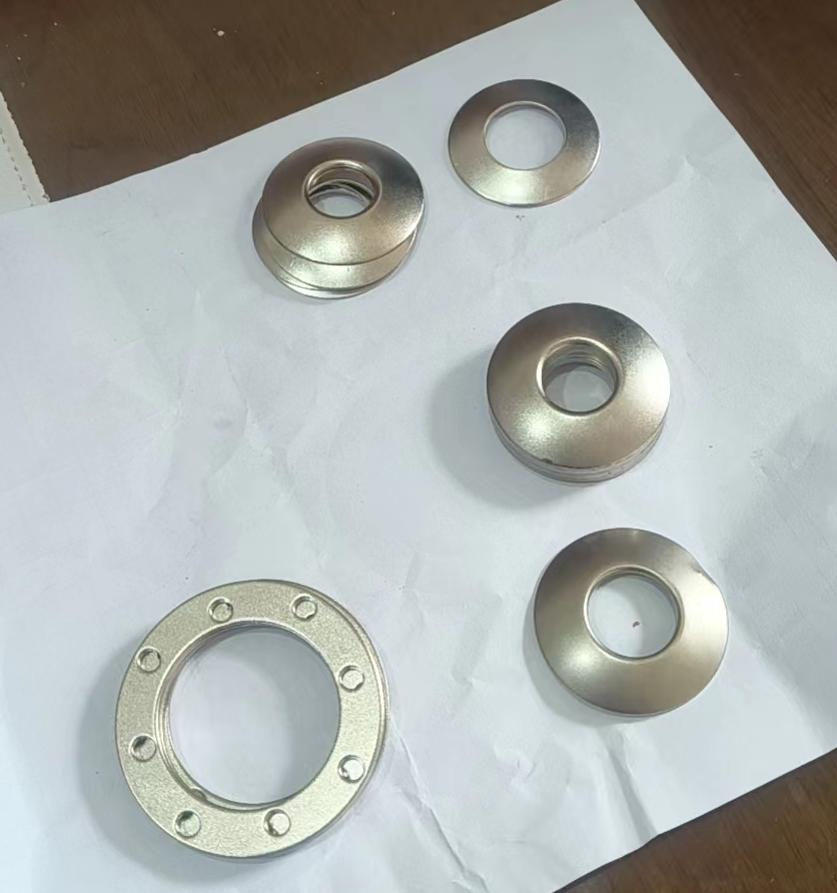
The EN-100 development project began with requirements communicated by Fengfan's Ningbo sales representative. The evaluation priorities were workpiece appearance, adhesion in a bending test, and efficiency. These priorities kept the assessment focused on the deposited coating and the time needed to obtain it, rather than appearance alone.
Samples were subsequently sent to Shandong for an on-site trial. A bath was prepared and used to process production workpieces for approximately four cycles. No problems were reported during this trial, which continued until the supplied sample material was used up. This provides a record of customer-site use within the scope described in the presentation.
Fengfan also carried out two rounds of laboratory testing, each covering approximately eight cycles. The presentation reports no problems during these laboratory trials and records how the time required to reach a measured coating thickness changed as the bath aged.
During the first four cycles, a coating thickness of approximately 4-5 µm was obtained in about 20 minutes. Later, as the bath aged, approximately 30 minutes was required to maintain the same 4-5 µm thickness. Reporting both observations gives customers a clearer view of the recorded processing performance over the tested bath history.
The recorded thickness and time should be considered together when reviewing the results. EN-100 reached the same reported thickness at both stages, but the later bath required a longer treatment time. This distinction keeps the discussion of efficiency tied to the actual trial record. Customers considering a follow-up evaluation can identify their target thickness and preferred processing time, then discuss those requirements with Fengfan against the conditions used in the tests.
| Test stage | Recorded observation |
|---|---|
| Customer-site trial | Approximately four cycles; no problems reported during the trial. |
| Laboratory evaluation | Two rounds, each covering approximately eight cycles. |
| First four laboratory cycles | Approximately 4-5 µm coating thickness in 20 minutes. |
| Later laboratory cycles | Approximately 4-5 µm coating thickness in 30 minutes as the bath aged. |
| Separate stability test | Bath held at 100°C under boiling conditions for two hours; no abnormalities reported. |
The technical presentation includes photographs of test workpieces and laboratory panels, including an appearance comparison and a bending-test comparison. These images document the evaluation alongside the written observations. The available material does not assign a numerical adhesion rating, so the bending photographs should be read as part of the test record.
In a separate stability test, the bath was heated to 100°C and maintained at boiling for two hours. No abnormalities were reported. This is a specific laboratory stability observation; the temperature and duration describe that test rather than recommended production operating conditions.
EN-100 was developed in response to customer requirements for workpiece appearance, adhesion assessed through bending tests, and processing efficiency. These were the main evaluation priorities recorded in the development project.
During the first four laboratory cycles, approximately 4-5 micrometers of coating was obtained in about 20 minutes. As the bath aged, approximately 30 minutes was required to reach the same 4-5 micrometer thickness. These figures describe the documented laboratory trials.
The customer-site trial in Shandong covered approximately four cycles, with no problems reported during that trial. Fengfan also conducted two rounds of laboratory testing, each covering approximately eight cycles, with no problems reported during those trials.
No. The bath was held at 100 degrees Celsius under boiling conditions for two hours in a separate stability test, with no abnormalities reported. This temperature describes the laboratory stability test, rather than a recommended production operating temperature.
For customers reviewing EN-100, the documented results bring together three evaluation priorities: coating appearance, adhesion assessed through bending, and processing efficiency as the bath ages. The field trial and repeated laboratory tests provide complementary information, while the recorded increase in deposition time remains an important part of the overall picture.
To discuss EN-100 for your own plating requirements, contact Fengfan with your workpiece details, target coating thickness, appearance requirements and current process concerns. Referring to these requirements alongside the documented trial conditions will help focus the conversation on the information relevant to your production needs.